
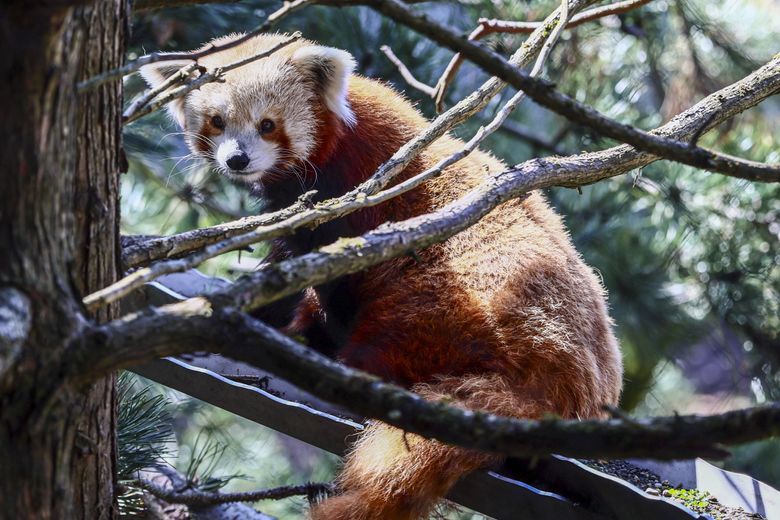
Just past Woodland Park Zoo’s west entrance, guests can be found strolling through a canopy path in the treetops at the new Forest Trailhead, catching a glimpse of tree kangaroos and a red panda.
The trailhead builds on the zoo’s Tree Kangaroo Conservation Program, which started in 1996 to protect the Matschie’s tree kangaroo population. The program works with communities in Papua New Guinea to save one of the last intact cloud forests in the world, according to the organization.
Home to various forest animal species, the zoo’s exhibit will open to the public May 1, with members getting early access April 28-30. The Forest Trailhead, which has a two-story, fully accessible space, will operate year-round from 10 a.m. to 6 p.m. daily, according to the zoo. Access to the facility is included in zoo admission or membership.
“There (are) over 40 staff members in Papua New Guinea that are sharing in the celebration of this exhibit that links Woodland Park Zoo across the world, across the Pacific, to the forests and communities of Papua New Guinea,” said Lisa Dabek, a senior director of the program and a senior conservation scientist with Woodland Park Zoo, during a media preview Friday.
Through the exhibit, guests can see tree kangaroos at the zoo for the first time in 10 years, as well as learn more about the global movement to restore forests and the species that live in them. In addition to the tree kangaroos and a red panda, visitors can view kea parrots from New Zealand and nearly 20 species of reptiles, amphibians and fish, according to the zoo. The new building spans 12,000 square feet and has 1 acre of outside habitat, said president and CEO Alejandro Grajal on Friday.
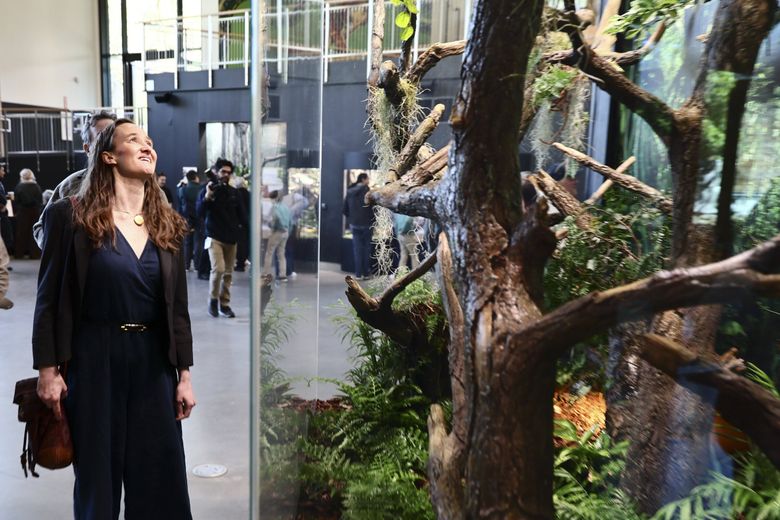
“The Forest Trailhead is an exhibit that is composed of three core elements: the forest that sustains us, all the communities that protect those forests and the animals that bring us together,” Grajal said.
The project — which had a budget of $40 million — was largely supported by Forests For All, a campaign by the zoo to aid its initiatives preventing deforestation, habitat loss and other effects of climate change. The Forest Trailhead received financial contributions from over 100,000 individuals, Grajal said in his remarks Friday.
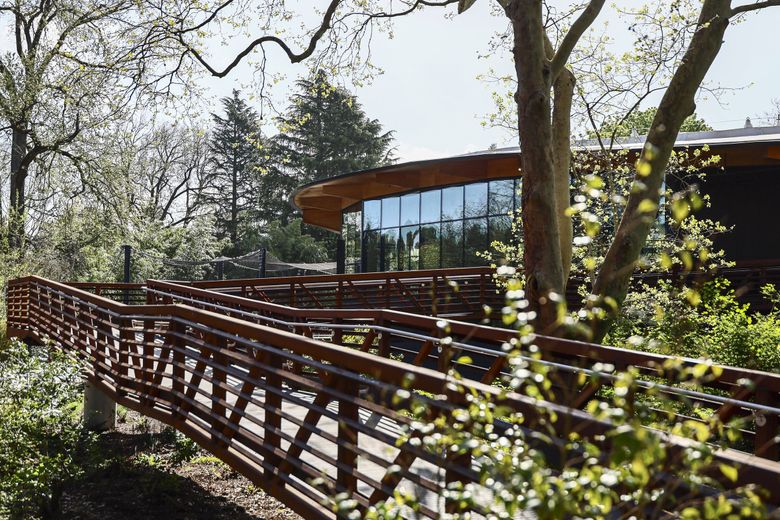
Planning for the exhibit began in 2021, said Rebecca Whitham, chief engagement officer at Woodland Park Zoo. Designed by Seattle-based LMN Architects and built by Sellen Construction, the Forest Trailhead offers an interactive and multisensory experience for visitors. In the exhibit, visitors can whiff scents of coffee and vanilla, reminding them of products in their daily lives that originate from forests and now deforested areas, Whitham said.
“Forests are nature’s best solution to climate change. They are the reason we have clean soil and clean air,” Whitham said. “It’s not just about the trees and the animals who live in them, but it’s this whole connected system that we are a part of, which also means we’ve got a role to play.”
On the building’s lower level, endangered species such as the red rainbowfish, blue-speckled tree monitor lizard and keeled box turtle are displayed. Zoogoers can also speak with keepers taking care of the animals on the treetop canopy level, Whitham said.
As guests wander the pavilion, they can find information on how to get involved in forest conservation efforts and see art by Indigenous artists that honor their cultural heritage. One of those pieces is a vertical metal installation and interior mural by Lummi Nation/Nooksack artist Jason LaClair, who used Coast Salish art forms to express stewardship for the Earth.
At the ribbon cutting of the Forest Trailhead on Friday, Seattle Mayor Katie Wilson said the project has been a longtime collaboration between the city’s Parks department and the zoo that is “rooted in a shared commitment to community conservation, discovery and public access.”


No comments:
Post a Comment