Link to Novels

Friday, November 29, 2024

After Five Generations, a Family Gave Back the Treasures in Its Closet


The descendants of a 19th-century federal official decided to return a prized collection of heirlooms to a descendant of a Lakota leader, Chief Spotted Tail.
( Photos Below )

By Julia Jacobs - NY Times 29 November

"The beaten-up suitcase had been in the Newell family for more than a century, passed from dusty closet to dusty closet and pulled out every now and then for guests.

They would unlatch the metal clasps and take out a fringed shirt adorned with careful beadwork, a weathered pair of moccasins and an elaborate headdress that trailed eagle feathers down to the floor.

Passed along with the suitcase was the story told by their 19th-century ancestor, Major Cicero Newell, who said he had received the clothing from the well-known Lakota leader, Chief Spotted Tail, during his stint as an agent for the federal government’s Indian affairs office beginning in the late 1870s in what is now South Dakota.

The suitcase had been passed down five generations, ending up in the guest room closet of Newell’s great-great-grandson, James, a retired salesman living in a small town in Washington State.

But when it came time for James Newell to think about passing it along again, the sixth generation had a different idea.

“‘Well, Dad, why don’t we try giving it back?’” James Newell, 77, recalled his son, Eric, asking when the topic came up several years ago at the dinner table.

The older Newell thought about it. There was the issue of whom they would give it back to, but that could be worked out.

“It felt right,” James Newell said.

The Newells’s suitcase is part of an untold number of Native artifacts kept in attics and closets across America, their origin stories often clouded by decades-long games of intergenerational telephone.

A 1990 federal law set up a protocol for museums and other institutions to repatriate Native human remains, funerary objects and other cultural items in consultation with tribes and descendants. But that law doesn’t cover the artifacts found in your grandfather’s basement or your aunt’s cupboard.

As younger generations inherit these possessions, they’re more likely to have an impulse toward giving them back, repatriation experts say. Some are motivated by a sense of ethical responsibility, some by practical considerations, and some because they have less interest in the “cabinet of curiosities” traditions of earlier times.

“Priority No. 1 was to get it into the hands of somebody who is going to take care of it and maintain it,” said Eric Newell, 46, who noted that it had been his “great-great-great-grandfather” who had the original connection to it.

So his father started doing research on the old suitcase in the closet, starting with the man who had asked that it be passed down to the firstborn son of each generation. (It had gone to James Newell, a second son, because his older brother had been wary of keeping the heirlooms in his trailer in the mountains, where he had worked as a logger.)

As with many family stories, the exact circumstances of how Cicero Newell came into possession of the heirlooms are somewhat ambiguous, so the Newells relied on what they had been told by previous generations and what they could find online.

A Civil War veteran from Michigan, Cicero Newell was appointed what was then termed a U.S. Indian agent — an employee tasked with communicating between the federal government and tribes. He was stationed in what is now reservation land of the Rosebud Sioux Tribe.

It was a tumultuous time in the region: The U.S. government had recently seized the Black Hills, flouting the treaty that had promised tribes control over the vast Great Sioux Reservation.

Newell, who later wrote extensively about his time on the reservation, described how he came to admire the Lakota leaders he met. His tenure at times drew criticism; some newspaper accounts accused him of acting as a pawn for Lakota officials such as Chief Spotted Tail. One article criticized him in harsh personal terms for helping spread the word about a Sun Dance ceremonyput on by the chief.

In his writings, Newell expressed a particular affection for Chief Spotted Tail, a storied tribal spokesman and negotiator who was shot and killed in 1881 by a member of his tribe. Newell wrote that when he passed on to the afterlife, “I hope that one of the first persons I may meet there will be my dear old friend Spotted Tail.”

What, exactly, Chief Spotted Tail thought of Newell is less clear from the historical record. Newell wrote that during his time as a U.S. Indian agent, he had successfully convinced Spotted Tail and other Lakota parents to send their children to a new federal boarding school out east.

In recent years, research into Native American boarding schools has more fully revealed the neglect and abuse that many children endured in them, as well as their targeted efforts to erase Indigenous students’ cultures to achieve assimilation.

In 1880, the year before he died, Chief Spotted Tail traveled to the school in Carlisle, Pa. Newspaper articles from around that time and letters kept in government archives indicate that he had been unhappy with the school’s approach to punishment and grew distraught over the sickness and deaths of schoolchildren.

For James Newell, an idea of what to do with the suitcase began to take shape in 2020.

Newell, who had been researching for more than a year, was looking on the website of the Rosebud Sioux Tribe when he came upon a familiar name: John Spotted Tail, chief of staff to the tribal president. He reached him over the phone and told him what was inside his family’s closet.

“At first I kind of thought it was a crank call,” John Spotted Tail, 69, recalled.

But as he listened to Newell’s story — after explaining to him that he was five generations removed from Chief Spotted Tail — he began to grow interested.

Newell was eager to give the contents of the suitcase to a descendant of the Lakota chief but wary of driving it across the country. Federal law prohibits the possession of eagle feathers without special dispensation, but the government allows exceptions for Native Americans because of their religious and cultural significance. Newell was worried that if he were to be stopped on the road, his possession of the headdress could land him in jail.

John Spotted Tail’s curiosity was piqued by Newell’s story. When he came home from work, he asked his wife if they had enough money to travel to Washington.

They got in the car the next morning, supplied with lunch meat and bread, and began a 1,400-mile drive to the home of a complete stranger.

“We’re halfway there and I look at John and I said, ‘What if these people aren’t real?” said Spotted Tail’s wife, Tamara Stands and Looks Back-Spotted Tail.

But as soon as the couple arrived in La Center, Wash., the Newells opened the suitcase for them. In addition to the clothing, it contained a bison horn and braided hair that could have belonged to a horse or a person.

“We looked at each other and we said, ‘Is this real? 144 years?’” she said. “We were just kind of in awe.”

After spending three days with the Newells, the Spotted Tails drove back to the Rosebud Reservation with the suitcase in the trunk of their Volkswagen Passat.

There was a tribal protocol they needed to follow to determine where the belongings would end up. They consulted Lakota spiritual leaders and cultural experts, participated in a ceremony surrounding the clothing and consulted other Spotted Tail relatives.

Some were skeptical about the story from the Newells; others wanted to see the items kept with the family. John Spotted Tail favored putting it in a museum, where visitors could learn about the Lakota leader.

For several years, he kept the suitcase in his home, but the responsibility began to weigh on him. “It was hard to even leave home or go anywhere because they were here,” John Spotted Tail said.

He and his wife called the South Dakota State Historical Society in Pierre, where curators wanted to feature the century-and-a-half old heirlooms prominently and assured them that they would be well preserved. And the museum was less than a two-hour drive from the reservation, making it accessible to local relatives who wanted to visit.

The suitcase, and the story of how it got here, was a historical society director’s dream.

The director, Ben Jones, looked through old photographs and read Newell’s writings to try to find evidence indicating that the Lakota chief had given the one-time Indian agent such a significant gift.

None surfaced, but it was clear that the two men had crossed paths, living in the same area for a couple of years and navigating the conflict around the U.S. government’s westward expansion.

In May, the Spotted Tails formally transferred the suitcase and its contents to the historical society at a ceremony involving Lakota prayers at a middle school in Pierre. The museum is hoping to put the heirlooms on display late next year.

“They became colleagues, and then friends,” Jones said of Newell and Chief Spotted Tail, “and five generations later, their families were wondering what to do with these artifacts.”

John Spotted Tail, center, and his wife, Tamara Stands and Looks Back-Spotted Tail, left, examine the suitcase passed down through the family of Eric Newell, right.Credit...


A portrait of Chief Spotted Tail, circa 1880.Cicero Newell, circa the 1860s.Credit...
Credit...


Image


Wednesday, November 27, 2024

Life in the Shadows


 Purchase the books on Amazon

A Long Ago Memory

                                                             The Rocking Chair


Thump, thump, thump echoes the rocking chair. 

She gazes out the window knitting.

Click, click, click.

Thump, thump, thump.


Her favorite chair.

Red and white and small enough to embrace her in peace.

Click, click, click.

Thump, thump, thump.


Born in 1903 she lived a swath of history.

The Wright Brothers flight in Kitty Hawk.

Surviving the 1906 earthquake.

Being a frightened teen during World War One.

Thump, thump, thump.

Click, click, click.


Becoming a flower in flapper days.

The Great Crash.

Married - moving into her parents home.

No jobs, little money - stress and worry.

Click, click, click.

Thump, thump. Thump.


Out of her parents and into their own flat.

Full of hope.

Brother Garrett dies. 

Four children when World War Two broke out.

Her husband Joseph in the Coast Guard - worry and panic.
Her brother John in the Pacific - worry and panic.
Her brother in law Russell  in the Pacific - worry and panic.

The fifth surviving child arrived six months before the war ended.

Losing her parents.

Thump, thump, thump.

Click, click, click.


Peace.

A sixth child is born.

Korean War.

The Norman Rockwell forget about it - Fifties.
Kids in school.

The Sixties and upheaval.

Direct challenges to her beliefs.

Will her sons get drafted to fight in Vietnam?

Worry and fear.

Click, click, click.

Thump, thump, thump.


Kids getting married.

Grandchildren.

The love of her life dies.

Emptiness.

Alone.

Click, click, click.

Thump, thump, thump.


Family birthdays.

Thanksgiving and Christmas visits.

Her brother John dies.

Her sister Gertrude dies.

Worry about her kids living so far away.

Worry, worry.

Click, click, click.

Thump, thump, thump.


Time passes.
Sickness arrives in various forms.

Memory is cloudy through the veil.

Is that so and so - yes, it is.

Deep sigh.

The needles fall from her hand.

Click - click.

Thump -  thump.

Silence.


Thursday, November 7, 2024

"A Trump Victory? If So, Break Glass In Case of Emergency" Malcolm Nance


Authors Note:  Sometimes I astonish myself. Before I wrote my last substack about Washington’s Crossing called Kneel. Pray. Win. I had written another one just in case things went South. That moment has come. The United States has voted for a dictatorship … and decisively. The Supreme Court will be lost for most of the century. Women will lose most of their reproductive rights and lives. And white people happily voted to impose tyranny over all other races and creeds. So what can you do that doesn’t involve the good Bourbon?

 Let’s face it: America has fundamentally changed from what it was founded to be. It is now an autocracy ruled by the white tribe. Here is what I wrote a few weeks ago for that break-glass moment. Read it and Weep.  Then get busy. We have work to do.

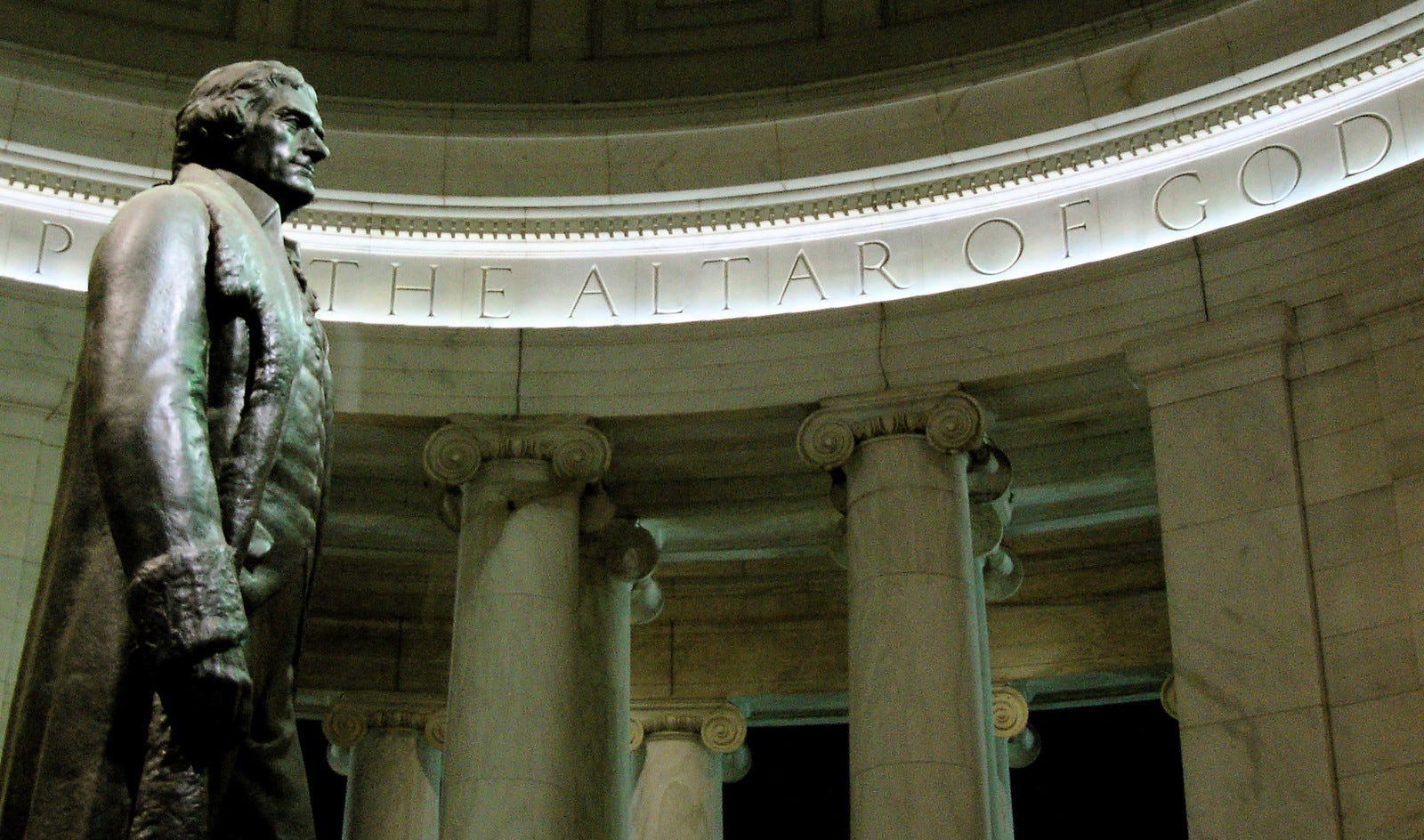
A statue of a person in a building

Description automatically generated

Imagine that it is Christmas morning in 1776. You are with George Washington’s army.  Midway through the crossing, the Marblehead sailors who are rowing hear something.  Before they can say a word, cannons sound all along the New Jersey side of the river.  Washington’s daring move is defeated before the boats touch dry land. Imagine British cannon fire raining down on them as surprise British troops had moved from Princeton in the night, and the Hessians were waiting to the south and raking them with gunfire. Now, picture the American experiment slowly drifting as a drowned failure under the ice of the Delaware River … and George Washington’s corpse is being paraded by German mercenaries.

My dear readers, if you are reading this, then the worst has happened. Donald Trump has been elected the 47th President of the United States.

You are likely filled with two feelings.  Some will be the same as you felt in 2016.  You feel shame and grief. But now add a complete collapse of understanding of how the Trump train hit you into the mix.  Your wits are torn asunder.  Your heart aches and is in deep throbbing pain.  You likely feel as if a close loved one has died, and you will be correct.

Like Washington, we risked a bold and daring campaign and since you are reading this, we have failed.  Benjamin Franklin’s words now ring true.   We were a Republic if we could’ve kept it.  We did not and it died today, so  Welcome to America, the Tyranny!

The End of 248 Years of Experimenting

What is now dying is the American experiment itself. And as our Russian enemies learned long ago (and passed on to their right-wing extremist toadies) was that the fastest way to kill Democracy was to use Democracy as the very knife to slit its throat.  We do not have a president; we now have a King with all the powers George III had at the time of the American Revolution.

In the Star Wars movie Revenge of the Sith, Queen Amidala summed it up neatly when she said, “So this is how Liberty Dies, to thunderous applause.”  Our problem is there is no Jedi order full of mystical space wizards to save us.  We did this to ourselves by popular demand.

A Trump presidency means the United States is about to get the government his sycophants voted for. You likely feel adrift as a voter of progress, goodwill, and true of heart.  We are on a boat alone in a vast ocean filled with terrible storms. But as all mariners know, there is a way for a sinking ship to save its crew and, in some instances, get back aboard and salvage it. But you can’t do it when crying, even if it’s a crying shame.

I feared for America these last few weeks; I believed we would win, but I kept a reserve of 5% caution that this could end in tragedy. (Author’s note: My prediction was 100% correct, and Trump won in a landslide.)

You are most likely feeling fear, trepidation, anxiety, and a burning pain in the middle of your gut that says things are going to get nasty. You are correct in those emotions as well. So, I will give you till the end of this article to feel all of those things and then get with the program.

At the end, I want you to have a deep, sobbing cry. Then I want you to stand up, get a hot beverage, and commit yourself to not surrendering all that you presently feel hold in your heart.

Trust me, I'm a widower, and your psychological well-being demands it.  Your family will look to you, and your friends will want to lean on you for the stalwartness you need to develop pronto.   

You must Hold Fast! That’s a nautical term to ‘grip the rope more tightly, or disaster will strike a worse blow than the first.’ Hold Fast. To what you know is right and true, and that is not MAGA. So no matter what they send at you, Hold Fast.

But Malcolm, why not just give in?

It is easy to surrender in a storm, to pass under the waves, and slowly die inside.  It is easier not to engage, go into isolation, or try comprehending the crisis that befell us. I understand it.

You may want to do what I do when the politics are at their worst. I turn on MTV and watch the vapid video show Ridiculousness, or I dial upMidsomer Murders or Poirot and binge for hours to cleanse my mind. But while I watch, I am also writing and formulating new ideas to help me with the predicament. I am constantly crafting new plans, whether for my house repairs, Christmas decorations, or memorial garden.  Strategizing and adopting major projects is the highest form of grief management.  Obsessively getting your affairs in order is something those of us who have lost immediate loved ones well understand. 

However, one cannot – nay, must not surrender to the sweet, cold admission that it is hard to fight. It is hard to stand against outrages, insults, and arrogance. But those are your only choices on this day of days. You can surrender to an America that is dictatorial and fascistic and will grind into the day-to-day affairs of your life without any input from you, your friends, or your family. You can let other people dictate what your life will be.  That’s why it’s called a dictatorship.  Information will now be sent to you in any form of “truth” they want you to see.

Or you can commit to taking some time off between now and inauguration day and prepare yourself for the upcoming political battle. It will not be wedged with weapons of war, as many on the extreme right-wing lustfully imagine. In this struggle, you must become the ultimate ally of the true promise of the Constitution of the United States. And, like the oath, we swear in the Armed Forces that we will uphold, protect, and defend that sacred document.  The time has come for you to do the same.

I don’t want you to do it in the cheesy Q-Anon, Mike Flynn way of standing in front of a video camera and taking a fake oath for TikTok. I want you to take the moment that hurts you the most, which will likely be high noon on January 20, 2025, and hold it in your heart. Swear to yourself that you will not let this abomination abide without your voice of opposition. Be it in op-ed commentary, Twitter responses, or calling into local radio shows, Facebook, whatever – Swear to make your voice heard because suppressing your voice is next up after suppressing your vote.  In fact, they want you to suppress yourself.

Take in the words carved into the Thomas Jefferson memorial as a touchstone, “for I have sworn upon the altar of god eternal hostility against every form of tyranny over the mind of man.”  That’s it.  That’s your mission statement. Better memorize it because every form of tyranny over the mind of man is about to be imposed on you.

Remember Rockwell Too

Interestingly, the Norman Rockwell Museum in Stockbridge, Massachusetts, is one of my favorite places in the world. My greatest pleasure is walking into the hall of the Four Freedoms. It has Rockwell’s four iconic paintings facing each other, including the Thanksgiving dinner table themed Freedom from Want.  Next is the chilling Freedom from Fear, with the father and mother tucking their sons into bed while reading a newspaper about men dying in the European war. Next is the beautiful Freedom of Worship with its multinational, multi-ethnic hands in prayer.  However, the one that touches me the most is freedom of speech.  I gasp every time I see it.  You must embrace its meaning.  You must stand up, even when afraid, and say what you mean and feel.  Right now, you feel a miasma of grief and pain.  But learn to stand up and say what you mean.  Tell everyone what you think is right, honorable, and true … before it is illegal.

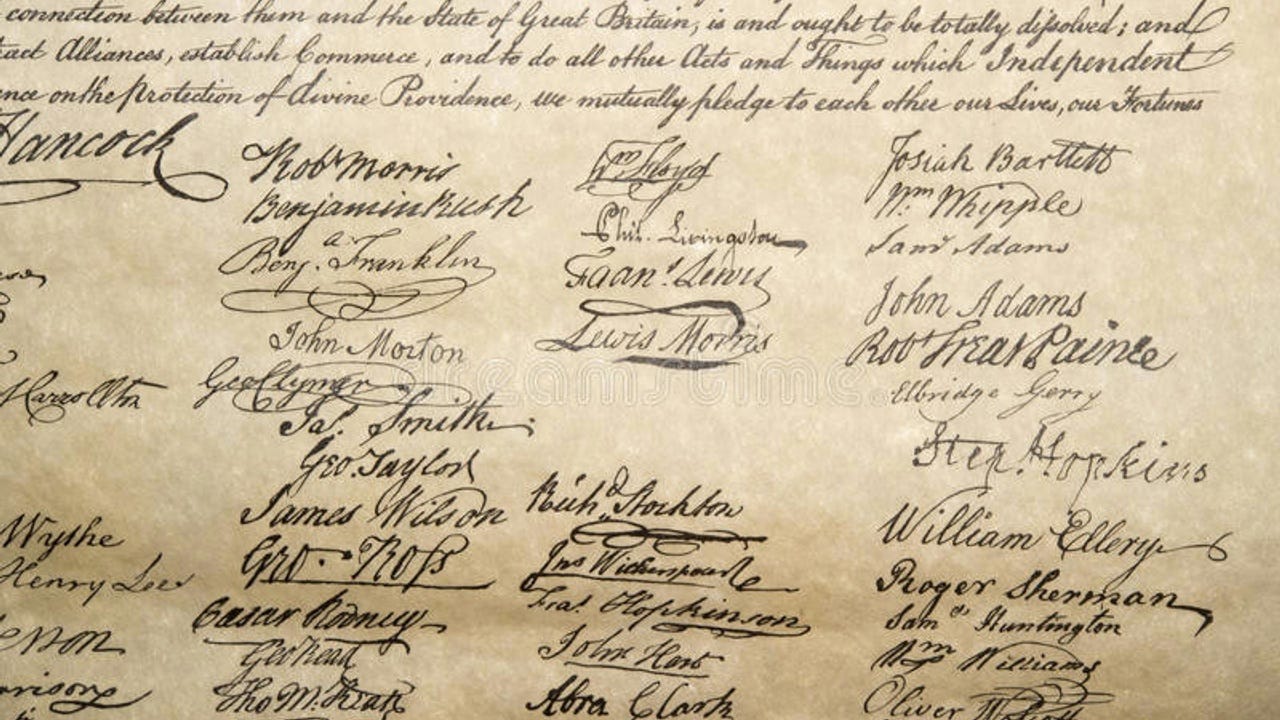
Tomorrow, you may feel anger and a desire for change.  OK, Stand up and say it.  Soon, you may have to choose if you will protest if and when America lurches into a complete dictatorship and/or civil war.  But once you have stood up and said you intend to speak up, remember these immortal words at the end of the Declaration of Independence: "We mutually pledge to each other our lives, our fortunes, and our sacred honor."

A close-up of a document

Description automatically generated

You, the reader, must understand the stakes of what speaking up means if the nation is to be saved.  You must become the most loyal and ardent defender of the founding principles at the risk of your life and fortune. If you cannot risk it for that foundational biscuit, then your voice will just become one of many that will be ignored -like drowning oarsmen in the alternate universe’s Delaware, where prideful British troops drink mulled wine and piss on your body.   Nobody wants that.

Right now, your MAGA neighbors v will likely view you as a foreign enemy to be intimidated, detained, or destroyed.

Be sure that the next four years will be a time of turmoil, economic hardship, and possibly civil unrest.  Before you can follow instructions on navigating through it, you must first organize.  Get your lifeboats back together, tie your fortunes to each other, and move with a purpose in opposition to the storm threatening to scuttle your hopes, dreams, and families. 

Today is the day to let go of the mourning and make the American Experiment work again.

Have a good cry. Spin on your heel, get a coffee, and Lets Fucking Go.


AUTHOR:

A career US Navy terrorism intelligence collector, code breaker, and interrogator with wide-ranging field and combat experience in the Middle East, South West Asia, and Africa, Mr. Nance is a counterterrorism analyst for MSNBC. He’s the author of The Terrorist Recognition Handbook, The Terrorists of Iraq: The Strategy and Tactics of the Iraq Insurgency, An End to al-Qaeda: Destroying Bin Laden’s Jihad and Restoring America’s Honor, and the New York Times best seller Defeating ISIS: Who They Are, How They Fight, What They Believe. Drawing on his experience as a thirty year veteran of the US intelligence community’s program on combating terrorism, he’s been a Middle East policy advisor to the US and international governments on special operations, homeland security, and intelligence.


Wednesday, October 30, 2024

Review of Listen Listen to My Hearts Song


 BOOK REVIEW - ***** 5 STAR

Reviewed by Sheena Monnin for Readers' Favorite
Listen, Listen to My Heart’s Song by M. Barrett Miller is a touching compilation of snippets of life, love, happiness, loss, and the invaluable lessons to be learned as we navigate through life. The author tells the stories of others with wit, charisma, and with great care. Each story is conveyed with clever simplicity, allowing for the fullness of the message to shine through. The reader is encouraged to connect with each story and to reflect upon similar themes in their own lives, providing the right blend of enjoyment of others’ experiences and hearkening back to one’s own. Spanning the country and crossing the globe, we meet people from all walks of life in this book, learning and appreciating pieces of their lives as we go. I appreciate the desire to tell others’ stories in Listen, Listen to My Heart’s Song by M. Barrett Miller. It provides both contributor and reader the chance to connect, albeit virtually and across the distance of time and place, and to enjoy the commonalities of humanity. The way the stories are told sets the tone for the book, making way for a respectful and pleasant look at lives all at once the same and yet very different from our own. The author is clearly well-traveled and well-connected with people he has known, and, in many instances, helped in one way or another. The author’s generous heart for humankind is the driving force behind the amazing content and touching stories. Listen, Listen to My Heart’s Song is the perfect remedy to a bad day, and the ideal pick-me-up when life feels overwhelming. Well done, M. Barrett Miller.