Link to Novels

Sunday, January 26, 2025

Thank you, President Biden - Leonard Pelter is now free to go home


Native American activist spent half a century in prison over 1975 murder of two FBI agents in South Dakota

Joe Biden commuted the life sentence of the Indigenous activist Leonard Peltier, convicted of the 1975 murder of two FBI agents in South Dakota, moments before handing over power to Donald Trump on Monday.

Peltier, who has spent half a century in federal prison, is said to be in poor health and would have not come up for parole until 2026 after being denied release in July last year.

In a White House statement, Biden said he was commuting Peltier’s life sentence so that he can serve the remainder of his sentence in home confinement.

“He is now 80 years old, suffers from severe health ailments, and has spent the majority of his life (nearly half a century) in prison. This commutation will enable Mr Peltier to spend his remaining days in home confinement but will not pardon him for his underlying crimes,” the statement read.

The commutation order noted that commutation for the Native American activist, who was convicted of killing two federal agents on the Pine Ridge Indian Reservation and escaping from federal prison, was widely supported.

“Tribal Nations, Nobel Peace laureates, former law enforcement officials (including the former US attorney whose office oversaw Mr Peltier’s prosecution and appeal), dozens of lawmakers, and human rights organizations strongly support granting Mr Peltier clemency, citing his advanced age, illnesses, his close ties to and leadership in the Native American community, and the substantial length of time he has already spent in prison,” it read.

In a statement after Peltier’s commutation was announced, he said: “It’s finally over – I’m going home. I want to show the world I’m a good person with a good heart. I want to help the people, just like my grandmother taught me.”

Peltier has maintained his innocence since he was arrested in connection with the deaths and had for decades been supported by advocates for his release by Coretta Scott King, Nelson Mandela and Pope Francis.

James H Reynolds, the US attorney who handled the prosecution and appeal of Peltier’s case, publicly apologized, calling the prosecution and incarceration of Peltier “unjust” and has called for his immediate release.

On 26 June 1975, years-long tensions over self-governance of tribal lands erupted in a shoot-out between the FBI and members of the American Indian movement (AIM), a cold war-era liberation group.

Peltier was among the four men who were indicted in connection with two agents’ murders. The all-white jury did not hear about underlying tensions between the two political factions at Pine Ridge reservation, and witnesses claimed that FBI agents had threatened and coerced them into their testimonies.

The prosecution withheld ballistics evidence, including the fact that Peltier’s rifle could not be matched to shell casings in the trunk of the FBI agents’ car.

Peltier was found guilty of the murders and given two consecutive life sentences. One of his current attorneys, Kevin Sharp, told the Guardian recently there has been misconduct in the investigation and misconduct by the prosecution.

Sharp said he has been frustrated with “the system that refuses to acknowledge the government’s role in what happened in June of 1975, refuses to acknowledge the context of what happened, refuses to acknowledge the violation of rights that happened”.
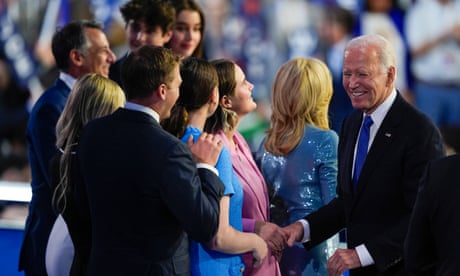
Prior attempts to pardon Peltier had failed, including efforts by the former president Bill Clinton after they were protested by FBI agents. The former FBI agent Coleen Rowley has said that the federal agency has a “vendetta” against Peltier.

After the order was released, Nick Tilsen, founder of the NDN Collective, an Indigenous-led civil rights group, said: “Leonard Peltier’s freedom today is the result of 50 years of intergenerational resistance, organizing, and advocacy.”

Tilsen added: “Leonard Peltier’s liberation is our liberation – we will honor him by bringing him back to his homelands to live out the rest of his days surrounded by loved ones, healing, and reconnecting with his land and culture.”


Wednesday, January 22, 2025

Camille Claudel - One of my favorite artists


Camille & Rodin ( Some question this photo )


“Madhouses are houses made on purpose to cause suffering…I cannot stand any longer the screams of these creatures.”— Camille Claudel in a letter to her brother Paul

"Camille Claudel was the rarest of creatures: an artist celebrated in her own time (and a female artist, no less), but after the dissolution of her relationship with Rodin she began to fall apart. She lived as a recluse in her Paris studio, still sculpting (some of her best work comes from this period), but more often than not going on rampages where she smashed everything she had created. Her paranoia was acute. She felt persecuted by Rodin, and regarded him as an omniscient, sinister creature. The reality, of course, was more complex. Rodin had recognized her genius, had brought her under his wing, and looked at her work with admiration and awe. Years after their affair ended, Rodin said of Claudel, “I told her where to find the gold. But the gold she mined was her own.” On his death bed in 1917, he asked for his wife, and when his actual wife was brought to him, he murmured, “No, no, the other one,” meaning Camille. Camille Claudel would not have been comforted to know this..."


Born in 1864, died in 1943—forgotten by the world, left to languish in a mental hospital.
What was her story?
She came to Paris to study art at a time when the prestigious École des Beaux-Arts was open only to men.
Undeterred, she joined studios that welcomed women.
There, she met and became the lover of the celebrated sculptor Auguste Rodin.
Their relationship was one of fiery passion and shared artistry—they created side by side, their collaborative genius preserved in works housed today in the Rodin Museum and Musée d’Orsay.
But Rodin, already entangled in a long-standing relationship with another woman, eventually left Camille.
As his reputation soared, hers plummeted.
She was scorned, shunned, and dismissed—not just as a lover but as an artist. Alone, distrusting, and out of favor, she struggled to sell her works.
Adding to her isolation, her brother, the renowned poet and diplomat Paul Claudel, played a pivotal role in her downfall. Camille, seen as "too modern" and a source of familial shame, was forcibly institutionalized by her family.
For 30 years, she fought to explain the injustice of her confinement, writing anguished letters to friends and family, pleading for release. Her clarity and heartbreak resonate in these preserved writings.
On October 19, 1943, Camille Claudel died of malnutrition in a French hospital.
No family members attended her funeral, and her body was buried in a common grave.
Decades later, the world has finally recognized her brilliance. Her legacy has been restored: her sculptures now stand proudly beside Rodin’s, and a museum near Paris is dedicated entirely to her work.
Camille Claudel is no longer forgotten. She is honored as the visionary she always was.

Woodland Park Zoo awarded grant to advance empathy for animals!! Yahoo!!


Woodland Park Zoo is pleased to announce a $7.15 million grant from Margaret A. Cargill Philanthropies (MACP) to advance and expand the zoo’s Advancing Empathy Initiative that fosters empathy for animals in Association of Zoos and Aquariums (AZA) accredited organizations. 

This three-year grant continues the zoo’s long-term partnership with MACP and organizations across the country to build strong empathic connections between humans and animals through research-based effective empathy practices, while also amplifying the zoo’s mission to save wildlife and inspire everyone to make conservation a priority in their lives.

Photo: Jeremy Dwyer-Lindgren/Woodland Park Zoo

Emerging behavioral science is showing that there are social and emotional components to changing our behaviors. Feeling empathy is an often overlooked but necessary step between learning about the need for change and taking action on behalf of another. Empathy allows people to connect their concern for the wellbeing of animals to the importance of acting in caring ways, including conserving the environment upon which both people and animals depend. 

“Millions of people each year visit AZA-accredited zoos and aquariums. We believe that building empathy is among the most powerful tools in our toolbox for galvanizing care and compassion for animals,” said Alejandro Grajal, PhD, President and CEO of Woodland Park Zoo. “Bringing people and animals closer is an innate strength of our field. By providing close encounters with animals, our institutions are uniquely positioned to help visitors feel empathy for wildlife, increase understanding of how animals are cared for, and encourage visitors to actively participate in our wildlife conservation efforts.”

Photo: Annie Kwan/Woodland Park Zoo

Woodland Park Zoo’s leadership in advancing empathy learnings and best practices within the zoo and aquarium community spans more than a decade. At the heart of this effort today is the Advancing Conservation through Empathy (ACE) for Wildlife™ Network, which began with 20 founding AZA-accredited partners in Alaska, Idaho, Minnesota, Montana, North Dakota, Washington and Wisconsin. The Network has since expanded to 27 network partner organizations across 13 states and has grown to include more than 550 participating professionals across five continents. Founded and led by Woodland Park Zoo, with philanthropic funding from MACP, the ACE for Wildlife Network facilitates professional collaboration and catalyzes accredited zoos and aquariums’ capacities to develop, implement, and measure the impact of empathy programming. (For a full list of participating Network partners, see below) 

With this new round of grant funding, the ACE for Wildlife Network will continue to identify and disseminate effective empathy practices – such as Woodland Park Zoo’s kea enrichment program with the zoo’s kea TepTep and Jean Luc, where guests learn about these highly intelligent parrots, their food and enrichment preferences. Visitors step into the birds' feathers to think about the animals’ perspective and needs and are given supplies to make them clever puzzles to hide treats. By observing the kea as they explore, play and problem solve, guests can relate and build a sense of connection to these birds, and that connection is critical to fostering empathy.

Photo: Annie Kwan/Woodland Park Zoo

“We’re so proud of this innovative community of zoos and aquariums who is guiding our field into a new era of relationships between people and animals, while collectively impacting more than 17.5 million zoo visitors and program participants across the ACE for Wildlife™ Network partners,” said Marta Burnet, PhD, Director of Advancing Empathy at Woodland Park Zoo. “Our development of leading-edge empathy programs and rapid response evaluation of their impact equip our institutions to more deeply engage visitors in conservation efforts while consistently applying new learnings to our practice. Ultimately, our holistic aim is to strengthen our guests’ empathy muscles through connections with animals, nature and each other.” 

During the three-year grant period, Woodland Park Zoo’s Advancing Empathy Initiative will re-grant $3.6 million to the Network’s founding partners, who are already developing pioneering programs and continuing to expand their influence across our field nationally and internationally. For example, Racine Zoo used a previous grant to develop a virtual animal encounter program that gives school children the opportunity to meet, learn about and name a Madagascar hissing cockroach – the most popular and frequently highlighted was named Georgia by a group of kids. Giving an animal a name is an important method for fostering empathy because it helps individualize the animal. Zoo staff utilize empathy best practices during these educational encounters – including describing Georgia’s unique personality traits and engaging students in perspective-taking – that can build positive attitudes towards underappreciated species. 

Thanks to grant funding from Margaret A. Cargill Philanthropies, the ACE for Wildlife Network offers free resources and effective empathy building practices online at www.aceforwildlife.org.

Photo: Jeremy Dwyer-Lindgren/Woodland Park Zoo

About Margaret A. Cargill Philanthropies 
Margaret A. Cargill Philanthropies (MACP) provides meaningful assistance to society, the arts, and the environment. Based in Minnesota, MACP is the umbrella over two grantmaking foundations: Margaret A. Cargill Foundation and Anne Ray Foundation. Rooted in guidance from our founder, Margaret Cargill, we engage with strategic partners to support work that makes a lasting difference for communities, with particular attention to overlooked causes. Our global funding spans seven domains connected through common strategies and approaches: Animal Welfare, Arts & Cultures, Disaster Relief & Recovery, Environment, Legacy & Opportunity, Quality of Life, and Teachers & Students. The collective assets of MACP place it among the largest philanthropies in the United States. 

This new grant supports Woodland Park Zoo’s vision to reimagine zoos through its 2018 through 2025 Strategic Plan. With the goal of being a catalyst for conservation, Woodland Park Zoo has undertaken a bold $110 million Forests for All comprehensive fundraising campaign to bring its Strategic Plan to life that has already been supported by more than 110,000 donors with generous gifts at every level. To learn more about the Forests for All campaign, please visit www.zoo.org/forestsforall


List of ACE for Wildlife Network Partner Organizations: Akron Zoo, Alaska SeaLife Center, Blank Park Zoo, Como Park Zoo & Conservatory, Conservation Society of California/Oakland Zoo, Dakota Zoo, Grizzly & Wolf Discovery Center, Henry Vilas Zoo, Idaho Falls Zoo, International Crane Foundation, Jacksonville Zoo and Gardens, Lake Superior Zoo, Minnesota Zoo, NEW Zoo & Adventure Park, Northwest Trek Wildlife Park, Point Defiance Zoo & Aquarium, Racine Zoo, Red River Zoo, Roosevelt Park Zoo, San Diego Wildlife Alliance, Seattle Aquarium, Saint Louis Zoo, Utah’s Hogle Zoo, Zoo Boise, Zoological Society of Milwaukee, ZooMontana 

Sunday, January 19, 2025

How fuck-you money can become fuck-me money


The Pathetic Billionaires’ Club

How fuck-you money can become fuck-me money


"Today’s newsletter will be a bit different from my usual. In general, I do data-driven posts, mainly about economics — and that will remain the norm. But right now, as some of the worst people in America are about to take power, doesn’t feel like the time for charts from FRED. So this entry will be informal and impressionistic, based partly on things I’ve seen, partly on speculation.

So: Much of the political and business world is prostrating itself at the feet of the least-qualified man, morally and intellectually, ever to occupy the White House.

It’s understandable if not excusable why many of those declaring fealty are doing so. If you look at what has happened to Liz Cheney or Adam Kinzinger you realize that Republican politicians who stand up to Trump destroy their political careers and put themselves at real personal risk. Many businesspeople — including media owners — fear that they will suffer monetarily if they cross the new regime.

But what’s truly extraordinary is the way billionaires have been abasing themselves before Donald Trump, a spectacle highlighted by Ann Telnaes’s now-famous cartoon — the one Jeff Bezos spiked, causing her to quit the Washington Post:


PS: I strongly urge everyone to show Ann Telnaes some love by reading her Substack, getting a paid subscription if you can afford it.

Why is this self-owning by billionaires so extraordinary? Well, ask yourself: What’s the point of being rich?

Past a certain level of wealth, it can’t really be about material things. I very much doubt that billionaires have a significantly higher quality of life than mere multimillionaires.

To the extent that there’s a valid reason for accumulating a very large fortune, I’d say that it involves freedom, the ability to live your life more or less however you want. Indeed, one definition of true wealth is having “fuck you money” — enough money to walk away from unpleasant situations or distasteful individuals without suffering a big decline in your living standards. And some very wealthy men — most obviously Mark Cuban, but I’d at least tentatively include Bill Gates and Warren Buffett — do seem to exhibit the kind of independence wealth gives you if you choose to exercise it.

The likes of Jeff Bezos and Mark Zuckerberg, however, surely have that kind of money, yet they’re prostrating themselves before Trump. They aren’t stupid; they have to know what kind of person Trump is and understand — whether or not they admit it to themselves — the humiliating nature of their behavior. So why do they do it?

The answer, I believe, is that many (not all!) rich men are extraordinarily insecure. I’ve seen this phenomenon many times, although I can only speculate about what causes it. My best guess is that a billionaire, having climbed to incredible heights, realizes that he’s still an ordinary human being who puts his pants on one leg at a time, and asks, “Is this all there is?”

So he starts demanding things money can’t buy, like universal admiration. Read Ross Douthat’s interview with Marc Andreessen, in which the tech bro explains why he has turned hard right. Andreessen says that it’s not about the money, and I believe him. What bothers him, instead, is that he wants everyone to genuflect before tech bros as the great heroes of our age, and instead lots of people are saying mean things about him and people like him.

Of course, Trump’s victory won’t do anything to restore the adulation he misses, so I can confidently predict that Andreesen and others in his set will keep on whining — that there will be so much whining that we’ll get sick of whining. Actually I already am.

Or consider the Elon Musk gaming scandal. Many people in the gaming world, which is huge, believe that Musk, who claims to be an avid and expert gamer, has been faking it, either by having someone else play for him or by using a more skilled player’s account.

It’s a deeply embarrassing story, if true. And while I don’t know anything about gaming, the accusations seem credible — and completely consistent with Musk’s behavior in areas I do know something about. His attempts to pose as a budget guruand a macroeconomist have, for those familiar with even the most basic facts, been as cringeworthy as his apparent fakery in video games — although for sheer cringe value nothing matches Mark Zuckerberg’s talk about “masculine energy.”

What the gaming story suggests is something I already suspected: Musk’s frenetic interventions on behalf of right-wing, racist politicians around the world are doing real harm — he definitely helped Trump win, his influence is one reason horrible people like Pete Hegseth will probably be confirmed for office, and sooner or later Musk will end up inspiring violence. But they shouldn’t be seen as a coherent political strategy. They are, instead, efforts to fill the emptiness inside.

But what about Bezos and Zuckerberg? Both made bids to define themselves as more than their wealth, Bezos by buying the Washington Post, Zuckerberg by unveiling Threads as an alternative to Nazified Twitter. But both lost their nerve. Bezos, initially seen as the Post’s savior, ended up trashing its reputation (and readership) with his political cowardice. Zuckerberg implemented an algorithm that made Threads uncontroversial and hence irrelevant, then lobbied hard and successfully to block efforts to protect children from the clear harm social media does.

So now they are defined by their wealth and nothing more, which I believe explains their submission to Trump. Trump would probably be able to damage their businesses if they didn’t bend the knee, but that would still leave them immensely wealthy, just possibly no longer among the wealthiest men on the planet.

The problem for them is that their status as the richest of the rich is, in ego terms, all they have left, which leaves them far more vulnerable than they would be if they were just run-of-the-mill billionaires.

So as I said in this post’s subtitle, fuck-you money has become fuck-me money. And the cravenness of billionaires will have dire consequences, not just for their reputations, but for the rest of us."

Thursday, January 16, 2025

Cartoonist David Horsey is the best!!!!!


IN THE NEWS: On Monday, the first convicted felon to be elected president will be sworn in as the nation’s 47th commander-in-chief.

Donald Trump will raise his right hand and swear to defend the constitution, even as he stands on a portico on the west side of the Capitol building upon which he unleashed a violent mob four years ago in an attempt to overturn a free and fair election. Among those with exclusive seats at this ceremony will be Amazon boss Jeff Bezos, Meta boss Mark Zuckerberg and other admiring tech billionaires who once shunned Trump. And Trump will take office knowing that most, if not all, of his controversial and unqualified Cabinet picks are heading for confirmation by a compliant, Republican-controlled Senate.

Trump’s inauguration will be the culmination of the most astounding political comeback in American history and the beginning of a presidency that may permanently alter the nature of our republic.

Buckle up; it’s going to be a wild ride.

Wednesday, January 15, 2025

Wonderful memory of Wolves Howling - Woodland Park Zoo


Read how it all began - "Life in the Shadows"


THE BRIDGE

Zoey Codrington

5 out of 5 Stars

Reviewed in the United States on Amazon


In "The Bridge: Life in the Shadows", M. Barrett Miller invites readers into a world where light and darkness coexist in an intricate dance of survival, hope, and redemption. With a narrative as haunting as it is illuminating, Miller crafts a compelling portrait of lives lived on the margins, exploring the complexities of human existence in the face of adversity. His characters are more than names on a page; they are vivid, multifaceted individuals whose struggles and triumphs feel palpably real.


Miller’s prose is both lyrical and raw, seamlessly blending the poetic with the gritty. In "The Bridge: Life in the Shadows", every sentence pulses with a deep emotional undercurrent, drawing readers into the shadowed corners of the human soul. The book does not shy away from confronting difficult truths, yet it carries an underlying thread of resilience and the power of human connection. Through his masterful storytelling, Miller builds a bridge between readers and the often unseen, unspoken realities of those living in society’s shadows.


The thematic depth of this work is remarkable. Miller explores universal concepts—identity, belonging, and the enduring quest for meaning—with a sensitivity that lingers long after the final page. His characters navigate a world of challenges, yet within their journeys lies a quiet, unyielding strength. "The Bridge: Life in the Shadows" challenges readers to confront their own perceptions of humanity, urging them to see beauty and worth in places they might not have looked before.


What sets this book apart is its ability to evoke both introspection and empathy. Miller’s narrative creates a sense of intimacy between the reader and the stories, bridging the gap between the familiar and the unfamiliar. His writing invites readers not just to observe but to feel, immersing them in a journey that is as heart-wrenching as it is hopeful. Each chapter is a testament to the resilience of the human spirit, offering glimpses of light even in the darkest of times.


This work earns a 5 out of 5-star rating for its profound storytelling, rich emotional landscape, and the depth of its exploration into life’s shadows. "The Bridge: Life in the Shadows" is a powerful reminder of the connections that unite us all, making it an unforgettable read that speaks to the heart.

Wednesday, January 8, 2025

Help Save Our Wolves and Pocket $10,000.00


Rewards Offered to Combat Wolf Poaching and Protect Endangered Species 

WDFW and Tribes counted a minimum of 260 wolves in 42 packs in Washington at the end of 2023. Twenty-five of the packs were successful breeding pairs.)
 

FOR IMMEDIATE RELEASE - 8 January 2025

Seattle, WA.  - The U.S. Fish and Wildlife Service (USFWS), the Washington Department of Fish and Wildlife (WDFW), and Conservation Northwest are calling for public support in their fight against poaching and the illegal killing of federally listed endangered gray wolves.  

The USFWS is offering up to a $10,000 reward for any information that leads to an arrest, a criminal conviction, or civil penalty assessment related to the recent killing of a gray wolf in Klickitat County. Conservation Northwest is offering an additional $10,000 reward if the wolf killer is brought to justice. 

On Dec. 17, WDFW staff reported investigating the death of an adult male gray wolf northeast of Trout Lake. This wolf was the last remaining member of the Big Muddy Pack, symbolizing a devastating blow to local wolf recovery efforts. This incident marks the second illegal killing of a gray wolf in Klickitat County this year. 

"Poaching is not only a crime against wildlife but an attack on our shared efforts to restore Washington’s ecosystems," said Paula Swedeen, Ph.D, Conservation Northwest’s Policy Director. "Each wolf lost to illegal killing undermines years of conservation work and delays the point at which the wolf population meets recovery objectives." 

According to officials, another wolf near Goldendale, Washington, died this fall from a gunshot wound that led to prolonged suffering and eventual starvation. Evidence showed the wolf dragged itself to a water source after losing the use of its back legs. These tragic incidents are part of a larger pattern, with five wolves illegally killed in Washington this year. Four of these cases remain under active investigation. 

"The illegal killing of wolves is not just an act of cruelty; it erodes the trust and collaboration needed to foster coexistence between humans and wildlife," added Jay Shepherd, Conservation Northwest’s Wolf Program Manager. "We stand firm in our commitment to holding perpetrators accountable and ensuring that Washington’s wolves can thrive for future generations." 

Officials are urging anyone with information about these crimes to come forward. Tips can be reported anonymously by calling the U.S. Fish and Wildlife Service TIPs line at 1-844-FWS-TIPS (1-844-397-8477), visiting Wildlife Crime Tips, or contacting WDFW at 877-933-9847 or via email at reportpoaching@dfw.wa.gov

Media Contact: Andrea Wolf, Communications Director, andrea@conservationnw.org, 510-295-3579