Link to Novels

Wednesday, March 27, 2019

Why Would an Animal Trade One Body for Another?


Most species undergo metamorphosis, but scientists aren’t sure why the process evolved. One new theory: Metamorphosis gives animals greater access to food.

By Carl Zimmer NY Times 25 March 2019

“As a child growing up in the Netherlands, Hanna ten Brink spent many days lingering by a pond in her family’s garden, fascinated by metamorphosis.
Tadpoles hatched from eggs in the pond and swam about, sucking tiny particles of food into their mouths. After a few weeks, the tadpoles lost their tails, sprouted legs and hopped onto land, where they could catch insects with their new tongues.
Eventually Dr. ten Brink became an evolutionary biologist. Now science has brought her back to that childhood fascination.
Eighty percent of all animal species experience metamorphosis — from frogs to flatfish to butterflies to jellyfish. Scientists are deeply puzzled as to how it became so common.
What evolutionary path could lead to a caterpillar — an admirably adapted leaf-eating machine — to tear down its body and rebuild it as a butterfly?
In the May issue of American Naturalist, Dr. ten Brink, now a postdoctoral researcher at the University of Zurich, and her colleagues lay out a road map for the evolution of metamorphosis. It has appeared, they argue, as a way for a species to eat more food.
The path to that feast is hard to travel, and metamorphosis has only arisen a few times in history. But once it does, the scientists also find, it rarely disappears.
Dr. ten Brink, Andre M. de Roos of the University of Amsterdam, and Ulf Dieckmann of the International Institute for Applied Systems Analysis in Austria created complex mathematical equations that captured some of the fundamentals of animal life — how much food they eat, how fast they grow, how many offspring they had and so on.
The researchers began by considering animals that didn’t go through metamorphosis. Keeping the same body through their lives, they are well adapted to one kind of food.
But what if their environment contained a second food, one that they could consume as adults if they evolved a different anatomy? Natural selection would prevent the animals from adding the second food to their diet, the researchers found.
In this case, evolution favors specialists: If animals evolve to eat the second food, their offspring will become worse at consuming the original diet when they’re young. More of them will die before they can mature.
“The obvious solution to the problem is to evolve metamorphosis,” said Dr. ten Brink. Young animals stay well adapted to the original food, while adults switch to the new food with a rebuilt body.
But animals pay a steep price to go through metamorphosis. They burn a lot of calories to tear apart the old anatomy and develop a new one. There’s a chance that this complicated process will go awry, leaving them with defects.
Metamorphosis also takes time, leaving animals vulnerable to predators and parasites. In many cases, Dr. ten Brink and her colleagues found, the cost of metamorphosis is too high for it to be favored by natural selection.
“You have to get back something really good,” she said.
Natural selection will favor metamorphosis if adult animals are rewarded with an abundant supply of food — enough to make up for the cost and to allow them to have lots of offspring.
In early stages of this shift, the adults will start out poorly adapted to the new food. But there’s so much for them to eat that they still get a decent meal.
“I like the concept — I like that they tried to look for the ultimate cause,” said Joanna Wolfe, a postdoctoral researcher at Harvard. But she wondered if food is the only reward that can help drive the evolution of metamorphosis.
Some species might benefit in other ways. Adults might take on bodies that allowed them to find mates more successfully, for instance. Larvae in the ocean might change their forms in order to be carried far away by the currents, expanding their range.
“I would like to see some things added to their model,” she said.
Dr. ten Brink agreed that the new study is a foundation for more detailed ones. “This paper is really the start of something,” she said.
If animals so rarely evolve metamorphosis, why is it so common? One reason may be that once metamorphosis arises, it’s very hard for a species to lose it.
It’s easy enough to imagine a situation where giving up metamorphosis would be a benefit. Imagine an outbreak wiping out the food that adults eat. For the species, it would be advantageous for individuals to remain larval and survive on what food remains.
But in most situations, Dr. ten Brink’s study suggests, evolution works against our expectations. If the adult food gets harder to find, natural selection will favor adults that do a better job of finding what little food is left.
“It’s an evolutionary trap,” said Dr. ten Brink. “If conditions get really bad, you go extinct.”
Vincent Laudet, a biologist at Pierre and Marie Curie University in Paris, said his own research on vertebrates supported Dr. ten Brink’s findings.
The first fish species went through metamorphosis, he noted, and it has largely endured for over half a billion years.
“In some vertebrates, metamorphosis is camouflaged, but it is never lost,” Dr. Laudet said.
When Dr. Laudet speaks of “some vertebrates,” he includes us. When babies leave the womb, their tissues undergo important changes, governed by some of the same hormones that spark metamorphosis in frogs and other animals.
“Our birth, biologically speaking, is a metamorphosis,” Dr. Laudet said.


Friday, March 15, 2019

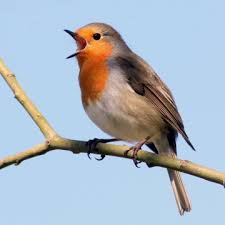
Song Birds & Extinction


This Songbird Is Nearly Extinct in the Wild. An International Treaty Could Help Save It — but Won’t.

Over a quarter of the species threatened by commercial trade are not protected by Cites, the global agreement intended to save them.

By Rachel Nuwer - 15 March 2019
“Fewer than 500 black-winged mynas remain in the wild in Indonesia, but each year more of the songbirds are captured and sold as pets.
Banteng — “the most beautiful and graceful of all wild cattle,” according to the World Wide Fund for Nature — were listed as endangered in 1996, but their horns still are sold in markets across Southeast Asia.
And the critically endangered giant carp, a Mekong River native that can weigh up to 600 pounds, recently began turning up on restaurant menus in Vietnam. Experts warn that the fish might soon be pushed into extinction.
International trade poses a threat to all of these species, yet not one is subject to key regulations that would help protect it. They are not listed under the Convention on International Trade in Endangered Species of Wild Fauna and Flora (Cites), a treaty meant to ensure that trade does not imperil the survival of threatened and endangered species.
These are not isolated cases: Cites oversights are all too common for many of the world’s endangered species, conservationists warn. “There’s a backlog of species that are being over-exploited and traded internationally, but lack protection,” said David Wilcove, an ecologist at Princeton University.
“Wildlife trade is a threat equal to or greater than habitat destruction for many species, and it’s not going to get any better unless countries step up,” added Dr. Wilcove, co-author of research into the problem published recently in the journal Science.
Cites protects thousands of animal and plant species by barring trade of the most highly endangered and by sustainably regulating the others. But as conservationists have repeatedly pointed out, the treaty neglects entire classes of animals, including 92 percent of the world’s 10,700 reptile species, most amphibians, songbirds and fish, as well as invertebrates and small mammals.
In their study, Dr. Wilcove and Eyal Frank, an environmental economist at the University of Chicago, sought to detail the disconnect between scientific data and action taken to protect plants and animals threatened by international trade.
The researchers first consulted the International Union for Conservation of Nature’s Red List, the authority on the conservation status of the world’s species. The scientists zeroed in on those listed between 1994 and 2013 as threatened with extinction, and then narrowed their focus to species jeopardized by the international wildlife trade.”

Tuesday, March 12, 2019

Flower Men of Saudi Arabia


Eric Lafforgue - Al Jazeera 12 March 2019

“Saudi Arabia - In Jizan and Asir, Saudi Arabia's southern provinces, live the reclusive Flower Men.
For centuries, these descendants of the ancient Tihama and Asir tribes have been known for wearing colourful flower garlands on their head.
They lived completely isolated until 20 years ago; their villages had no electricity or paved roads and they lived according to traditional tribal law.
Even today, the Flower Men were reluctant to have their photos taken or even meet strangers.
They enjoy their peaceful way of life and the margin of autonomy they are given.
They are the only tribes in Saudi Arabia who are allowed to grow and consume khat, a stimulant drug. Possession of drugs is punishable by the death penalty in the kingdom.
The Flower Men also hold strongly to their tradition of floral decorations as a peaceful way of setting them apart.
The community spreads across the border into Yemen, a country the Saudi-led coalition is targeting in air raids.'

Sunday, March 10, 2019

Do Any Animals Know Their Grandparents?


By Mara Grunbaum, Live Science Contributor | March 9, 2019

Grandparents are revered in many human societies. But telling stories about old times and overfeeding grandchildren seem like distinctly human traits. Are these classic grandparent behaviors really limited to Homo sapiens? Do any animals know their grandparents the way people do?
For most species on Earth, the answer is an unequivocal no. "Usually, there just aren't grandparents living anymore" when an animal is born, said Mirkka Lahdenperä, a biologist at the University of Turku in Finland. Even if an animal's life span does overlap with its grandparents', most species spread out to avoid competing for resources, so the odds of running into a grandparent are slim.
But there are a few notable exceptions, primarily among mammals that live in close-knit social groups. In her book "The Social Behavior of Older Animals" (Johns Hopkins University Press, 2009), Canadian zoologist Anne Innis Dagg described troops of langur monkeys in India in which older females commingled with their daughters and grandchildren.
The grandmother langurs have a particular job: They aggressively defend the group's infants against attacks from humans, dogs and rival monkeys. Some female langurs even give their own grandchildren special treatment, grooming them and stepping in when they play too roughly with other young.
Many whale species, too, travel in family pods that include both grandmothers and grandcalves. In groups of sperm whales, according to Dagg, old females help babysit the group's young while their mothers dive for food.
Orca grandmothers often lead their pods and can live for decades after they stop reproducing. (The oldest known orca, nicknamed "Granny," died in 2016 at over 100.) In 2015, scientists writing in the journal Current Biology suggested that these elder orcas help their descendants survive during hard times, because they remember all the best places to find food.
Elephant herds are also famously matriarchal. Calves are typically born into groups led by their grandmothers, who can live to around 80 years old. The females in a herd form close bonds, said Lahdenperä, and collaborate to raise their young.
In a 2016 study in the journal Scientific Reports, Lahdenperä tried to determine if being an elephant grandmother has evolutionary benefits. She analyzed records from a semi-captive population of Asian elephants working for the timber industry in Myanmar. Some adult females still lived in groups with their mothers, while others had been moved to different areas.
Lahdenperä found that the calves of young mothers were eight times more likely to survive if their grandmothers lived near them than if they didn't. When the calves' mothers were older and more experienced at raising babies, this beneficial "grandmother effect" disappeared even if the actual grandmothers were still around, she found.
It isn't entirely clear how elephant grandmothers help their inexperienced daughters, said Lahdenperä. There's anecdotal evidence that they may help nurse their grandcalves, thereby giving them a nutritional boost. But Lahdenperä thinks that the more likely advantage is the wisdom a grandmother elephant has amassed during her long lifetime. If a calf gets stuck in a mud pit, for example, its grandmother might be more successful at helping the calf than its mother would be, because she's seen similar situations.
Indeed, most evidence for the benefits of grandparenting comes from mammals. But in 2010, researchers reported in Current Biology that in colonies of insects called gall-forming aphids (Quadrartus yoshinomiyai), older females defend their relatives after they've ceased to reproduce. And a 2007 study in the journal Evolution found that older female Seychelles warblers (Acrocephalus sechellensis) sometimes help their offspring raise chicks.
And what about grandfathers? Studies of humans in recent decades have shown that a living grandfather can improve a person's mental health and other indicators of well-being, said Lahdenperä. But there's no evidence of that in the animal kingdom, she said. Male animals rarely socialize with their own progeny, let alone any further descendants. "Males are usually focusing on producing [more of] their own offspring, and aren't providing so much care," Lahdenperä said.”
See our website Let Kids Be Kids. org for more information on our
Advocacy for those Seeking a Voice.
To support our Animal Protection advocacy, or to donate towards our endangered species project see these links:


Thursday, November 9, 2017

Freeing Chimps


Hard to believe how we've treated another citizen. NY Times
"BLUE RIDGE, Ga. — On the 16-hour ride from Louisiana, Bo looked out the window, took in the scenery, dozed and relaxed.
He was traveling with five other male chimps from the New Iberia Research Center in Lafayette, La., where they had been members of a colony of nearly 200 animals kept for biomedical and other research.
During the ride, some of the other chimps hooted, restless and unsettled. Not Bo. “He’s the best,” said the driver of the truck.
The animals arrived at Project Chimps, a sanctuary at the southern end of the Blue Ridge Mountains about 100 miles north of Atlanta, at 6:30 a.m. one day last spring. As the sanctuary staff began to open the truck and move the chimps’ cages inside the facility, the occupants hooted and screamed, anxious and uncertain about what was going on.
The first cage was opened into a sort of antechamber, and a chimp named Jason was first to explore his new home, rushing with what seemed like nervous energy through a small door into the large habitat.
Called a villa, the enclosed space is built like an extremely large metal cage, about 1,500 square feet and two stories high with metal platforms at different levels.
Jabari, the second arrival, slowly joined Jason to explore the new enclosure, but they kept their distance from each other. Lance was third in line, hesitant to leave the small antechamber. The staff waited about a half-hour for him to build up his nerve.
Then, hoping to encourage Lance, they decided to let in Bo, the group’s dominant chimp.
Bo knuckle-walked, casually and confidently — knuckle-swaggered, you might say — into the large enclosure. Lance followed immediately. And then the group hugs began.
Eddie and Stirlene, the last two chimps, came through the entrance to more hugs. The group’s relief and happiness was so infectious that all the humans smiled. The chimps lip-smacked and held one another’s genitals.
“That’s normal reassuring behavior,” Jen Feuerstein, the top administrator at the sanctuary, told me.
Bo was in the house, and all was well.
‘Special Consideration’
It probably will stay that way in the long run: The era of biomedical research on chimpanzees in the United States is effectively over. Given the nearly 100-year history of experimenting on chimps, the changes seemed to come fairly quickly once they began.
In 2011, the director of the National Institutes of Health, Francis Collins, declared that the N.I.H. would fund no new biomedical research using chimps, which he described as “our closest relatives in the animal kingdom” deserving of “special consideration and respect.”
His comments were both stunning and obvious. Jane Goodall, the famed primatologist, and others already had shown the world the richness of chimp intelligence and social life; molecular biology had revealed that humans and chimps share 98 percent of their DNA. But the biomedical scientific establishment has long emphasized the importance of animal research.
Dr. Collins’s decision reflected widespread ethical concerns among scientists about the treatment of such social, intelligent animals. But on a practical level, the care of chimps is costly, and they aren’t always a good model in which to study human diseases. They’re also a magnet for public concern.
By 2015, the N.I.H. had gone through several stages of decision-making and concluded that it would retire all chimps it owned, retaining none for potential emergency use — in case of a human epidemic, for instance. The agency owns about 220 chimps outside of those now in sanctuaries and supports another 80, which will also be retired.
That year the Fish and Wildlife Service classified all chimpanzees as endangered, removing a longstanding exemption for captive chimps that had allowed biomedical experiments. The decision made such research illegal without a permit requiring that any such experiments benefit chimpanzees. Privately funded medical research on privately owned chimps also was effectively banned.
Currently, about 547 chimps are still held at research institutions, according to ChimpCARE, a site that tracks all chimps in the United States. Some of them are owned or supported by the N.I.H., and some are owned by research institutes like New Iberia, which is part of the University of Louisiana at Lafayette.
All the government chimps are headed to Chimp Haven, a sanctuary in Keithville, La., where they will have a full social life and room to roam outdoors.
Some critics say the process has been unnecessarily slow, but both Chimp Haven and the N.I.H. say transfers are moving more quickly now. The sanctuary has accepted 14 chimps in the past two months and is expecting more before the end of the year.
Chimp Haven, with a staff of 50, more than 200 chimps and a 30-year history, has had a lot of experience caring for retired chimps. They are kept in mixed groups of various sizes and their social interactions monitored.
To prevent breeding new chimps that would have to spend their lives in captivity, Chimp Haven gives all the males vasectomies.
But “vasectomies do fail,” said Raven Jackson-Jewett, the attending veterinarian at the sanctuary. “Conan was the one that taught us that.”
Conan had the procedure but somehow fathered three youngsters anyway, including Tracy, now 10 and a favorite of visitors. Dr. Jackson-Jewett said that because of Conan, Chimp Haven had learned that chimp vasectomies fail more often than those in humans.
The staff changed its technique, re-vasectomized about 75 chimps with the new method, and hasn’t had a pregnancy since.
The sanctuary also has learned to care for frail chimps. Many animals from labs have been infected with H.I.V. and hepatitis for vaccine experiments, and some have diabetes (not related to experiments).
They are often old: Some arrive near 50 years of age, and the lifespan of chimps in captivity runs from 50 to 60 years. Occasionally chimps are deemed too old even to handle the stress of being sent to the sanctuary.
The sanctuaries hope eventually to put themselves out of business. If all goes as planned, in another 50 years or so, there will be no more lab retirees.
Chimps will still be in zoos and, as the laws now stand, private owners could still breed them. But since the demand for their use in research is now zero, that is unlikely to happen on a large scale.
Most privately owned laboratory chimpanzees are also headed for retirement centers. New Iberia has shipped 22 animals to Project Chimps, where Bo and his cohort now live, but still has nearly 200.
The Project Chimps facility, which formerly housed gorillas, is still being renovated for chimps. They will get to play in eight acres of walled-in open space, with trees, a stream and an open meadow — once the walls are fixed. (Unlike gorillas, chimps are agile climbers.)
Those left at New Iberia aren’t isolated. They live in groups in large, dome-shaped outdoor cages. The domes have a bit less than a 1,000 square feet of floor space.
Although chimps in research were once housed in smaller cages, and in isolation for experiments, practices have changed; labs and sanctuaries have recognized that it is cruel to house chimps alone.
The only other private chimps still at research institutions include 46 owned by the Yerkes National Primate Research Center at Emory University in Atlanta, and one at Georgia State University. Yerkes is looking for retirement facilities for its chimps and has sent seven to the Chattanooga Zoo.
Yerkes also sent eight chimpanzees to an unaccredited zoo in England, prompting an outcry from animal welfare advocates in this country and in Europe. The move prompted a lawsuit, because the Fish and Wildlife Service approved it even though advocates insisted there were better options in the United States.
Yerkes said that the English zoo was well equipped and enlisted comment from Dr. Goodall, who said she had visited the facility and supported the move.
The lawsuit was the first test of the protections offered to chimps by the endangered species classification. Exportation requires a permit from the Fish and Wildlife Service, which can only be granted if the action benefits the species.
The agency accepted Yerkes’s argument that a donation by the English zoo to a group that had never before worked with chimps fulfilled that requirement. The decision outraged many primatologists and chimp advocates, but in the end the courts allowed the move.
Within the animal welfare community, some of the elation about the government decisions of a few years ago has now, inevitably, been replaced by a recognition of the difficult logistics, the need for continued fund-raising and the occasional roadblocks.
“Patience has been a huge lesson for me,” Laura Bonar, chief program and policy officer at Animal Protection of New Mexico, said in an interview. Ms. Bonar was one of the activists who had worked to bring about the decisions to end experimentation.
Patience is useful even in the case of chimps like Bo, who have already been transferred to sanctuaries. Soon, perhaps by the end of this year, Bo and the other chimps at the sanctuary are expected to step outside of steel bars for the first time in their lives.
They have been doing well. Janie Gibbons, one of the staff members who takes care of the chimps, said Bo continues to lead by example — as he did recently when the group encountered something they never seen before.
The first time they were given tomatoes, they were flummoxed. “Bo is very brave and tries things first,” said Ms. Gibbons. “He took one and very meticulously ate the peel first, then the fruit.”
Satisfied that tomatoes were safe, the others followed. But not all in a rush: Jabari threw his first tomato against the wall, even though he and the other chimps had gathered around Bo and peered as closely as they could as he ate the alien fruit.
Now the chimps all eat tomatoes as if they were apples. And that’s what the future may hold for all chimps: open space and tomatoes.
But it’s just going to take a while.
Correction: November 7, 2017 
An earlier version of this article misstated the university that owns a chimpanzee used in research. It is Georgia State University, not the University of Georgia.

Tuesday, November 7, 2017

Tax Proposal


Please read this as well as the budget plan. Your vote matters.


By Lawrence H. Summers NY Times

November 5 at 4:23 PM PT

"With the release of the Republican tax proposal, the most important tax debate in a generation is in full swing. Most reasonable experts agree that tax reform has the potential to spur investment and raise wages while also simplifying the system and increasing its fairness and legitimacy. The right question for debate is not the desirability of tax reform or even of business tax reform directed at spurring investment. It is the likely economic effect of particular proposals.


Unfortunately, the proposal on offer by House Republicans may well retard growth, reward the wealthy, add complexity to the code and cheat the future, even as it raises burdens on the middle class and the poor. There are three aspects of the proposal that I find almost inexplicable, except as an expression of the power of entrenched interests.

First, what is the rationale for passing tax cuts that increase the deficit by $1.5 trillion in this decade and potentially more in the future, instead of pursuing the kind of revenue-neutral reform adopted in 1986? There is no present need for fiscal stimulus. The national debt is already on an explosive path, even without taking into account large spending needs that are almost certain to arise in areas ranging from national security to infrastructure to addressing those left behind by globalization and technology.

Borrowing to pay for tax cuts is a way to defer pain, not avoid it. Ultimately, the power of compound interest makes necessary tax increases or spending cuts that are even larger than those tax reductions. But in the meantime, debt-financed tax cuts would raise the trade deficit and reduce investment, thereby cheating the Second, what is the case for cutting the corporate tax rate to 20 percent? For at least five years under the GOP proposal, businesses would be able to write off investments in new equipment entirely in the year that those investments are made. So the government would be sharing to an equal extent in the costs of and returns from investment, eliminating any tax-induced disincentive to invest. The effective tax rate on new investment would be reduced to zero, or less, even before considering the corporate rate reduction. A corporate rate reduction serves only to reward monopoly profits, other rents or past investments. Given the trends of the past few years, are shareholders really the most worthy recipients of such a windfall?

Proponents of the House approach defend it by pointing to international considerations. Unfortunately, the “territorial” approach being pushed by the House, which would renounce the objective of taxing the global income of U.S. companies, could easily encourage offshore production. Wouldn’t it be much better for the United States to lead an initiative to prevent a race to the bottom in global corporate taxation than for it to try to win a race to the bottom?

Third, why include new complexities that help the richest taxpayers while taking steps that hurt middle-income families? Why should passive owners of businesses that are already avoiding the corporate tax get a big rate reduction to 25 percent when those who actually operate and work in such businesses pay at a higher rate? What is the rationale for eliminating the estate tax when it is paid by only 0.2 percent of estates?

At a bare minimum, if such provisions are to be adopted, one would assume they would be paid for, to the maximum extent possible, through steps such as eliminating the carried-interest loophole or loopholes that enable real estate tax shelters. Not so. The proposal instead goes after measures such as the adoption tax credit, deductions for major medical expenses and the deductibility of student-loan interest. These seem like far more important benefits to preserve than carried interest.

Congress should instead return to the 1986 approach of revenue-neutral tax reform, while being careful not to adversely affect the progressivity of the tax system. This would enable what is most needed now: strengthening incentives for investment in the United States relative to other countries and raising the legitimacy of the tax code.

It is possible (though I doubt it) that the questions I have raised here have good answers. And there may be reasons that 1986 is an inapplicable model for today.

What is certain, though, is that we have a once-in-a-generation debate underway. Even those who disagree on policy should be able to agree on the importance of not making decisions until all relevant analytical work can be completed."

Monday, October 30, 2017

Lions...


Please, before you go to sleep tonight, think of ways you can reach out and help all the creatures out there-----humans as well. 
Lions.

“African Lionesses, Maasai Mara National Reserve, Kenya: Lions are the only truly social cats; the females and offspring reside together in prides. Typically hunting in groups, the lionesses prey mostly on large hoofed mammals. Within each pride, females will often reproduce in synchrony and cross-suckle their cubs.

“It was early morning in the Great Rift Valley as we searched for a famous pride of lionesses. Since it was very cold, the females were piled on top of each other, forming groups and staying close. This particular set grabbed my attention because they were staring glassy-eyed in different directions. I wanted to capture all possible details in the frame with a tight crop to make a striking black and white conversion.”

Let Kids Be Kids advocates for the rights of all those in the animal kingdom. Yep, humans too. And, in particular, all those Lions out there.

To support our Animal Protection projects, or to donate towards our endangered species project see these links: Universal Giving http://tinyurl.com/jzdj4rp or PayPal Giving Fund http://tinyurl.com/z42hsx6

Photo: Nature’s Best Photography site (© Lakshitha Karunarathna

Friday, October 27, 2017

Our drug scourge

Here is exactly how Trump et al could help with the drug scourge.
“Here it is: allow Medicaid to start paying for treatment at large institutions for mental disease (known as IMDs). Under a current policy known as the “IMD exclusion,” people on Medicaid can’t get substance abuse treatment at facilities with more than 16 beds…"http://tinyurl.com/yar3aesj